When you click on links to various merchants on this site and make a purchase, this can result in this site earning a commission. Affiliate programs and affiliations include, but are not limited to, the eBay Partner Network.
was your gates pump like this? this is from a pt cruiser(yea i had a PT). most people use airtex or mopar parts, which have stamped steel or plastic impellers. the gates pumps that were failing had cast iron impellers.
can you post a pic of yours? i'm very interested to see how it failed.
was your gates pump like this? this is from a pt cruiser(yea i had a PT). most people use airtex or mopar parts, which have stamped steel or plastic impellers. the gates pumps that were failing had cast iron impellers.
can you post a pic of yours? i'm very interested to see how it failed.
That's exactly how my water pump failed. I don't have the old one anymore because I turned it in for a core charge at Napa when I bought a temporary pump until the OEM one came, but that's exactly how it failed.
Well the stream is based on the civic, you could just see if the connectors are the same and try to connect it to see what happens. But then you risk frying something so.... yea.
Well the stream is based on the civic, you could just see if the connectors are the same and try to connect it to see what happens. But then you risk frying something so.... yea.
The Civic and Stream do share a lot of parts. My PCM and engine harness is from an RN1 Honda Stream.
This just further hits home why OEM parts are always recommended. Honda has built a reputation of reliability and this is not from using junk parts. Gates makes the timing belt but those are different then water pumps.
Originally Posted by RobertD
(yea i had a PT)
Lmao, I would have never guessed that. I don't even know if they were decent cars but I have heard them be referred to as PT Losers . I saw a lot during my high school years.
I paid $250 for it with 176k miles. I beat the HELL out of it and finally parked it at 276,000 miles. I mean powershift at least once daily and sometimes ripping the shift **** off. Twice i threw the **** into the hatch area yanking it into second. A Civic trans takes that abuse for 2-3 months. This beater was still fine after 100k miles or so. I had the base model. One can pick up a GT version for $1500 because they have terrible resale value.. it's the same engine as an srt neon but with a stronger trans. One friend has one gutted like a tin can. With the stock turbo, just a tune, slicks, and a 50 shot he's running 11's. I have a soft spot for them now. Even the forum is funny. It's old guys that more or less like the style but out grew the need for speed. Like real car guys from the 60's and 70's. They add louvers, used to own hot rod shops, race supergas, it's weird. For a car I did not like and had no interest in, I really have nothing bad to say about now. I might even have a bit of a soft spot for them.. Not that I want another. Weird I know. I never would have thought either. I posted a video on page 2 http://www.ptcruiserlinks.com/forum/tech-performance-forum/49873-my-car-just-got-slower.html
Haven't read the other responses, but strongly consider a bad head gasket. This is exactly how mine presented, and I replaced every component of my cooling system before the problem was correctly diagnosed.
I don't even know if they were decent cars but I have heard them be referred to as PT Losers
They are probably pretty decent cars. I absolutely love my $400 2000 Dodge Stratus 2.4, which is similar to the PT Cruiser in a lot of ways. Same engine, same transmission, etc. That car looks like s***. The paint is falling off, it has no front bumper, and it's all dented up, but it never left me stranded or needed anything but regular maintenance. Unfortunately, a friend ran it hot until it died after a rock destroyed the radiator. Even then, it didn't give up easy. He said it drove 40 miles with the temp pegged on H, the oil pressure light on, the engine light flashing, and smoke pouring out from under the hood before it quit. We aren't friends anymore for obvious reasons. I'm going to put another motor in it as soon as I can and keep driving it. I love my reliable POS.
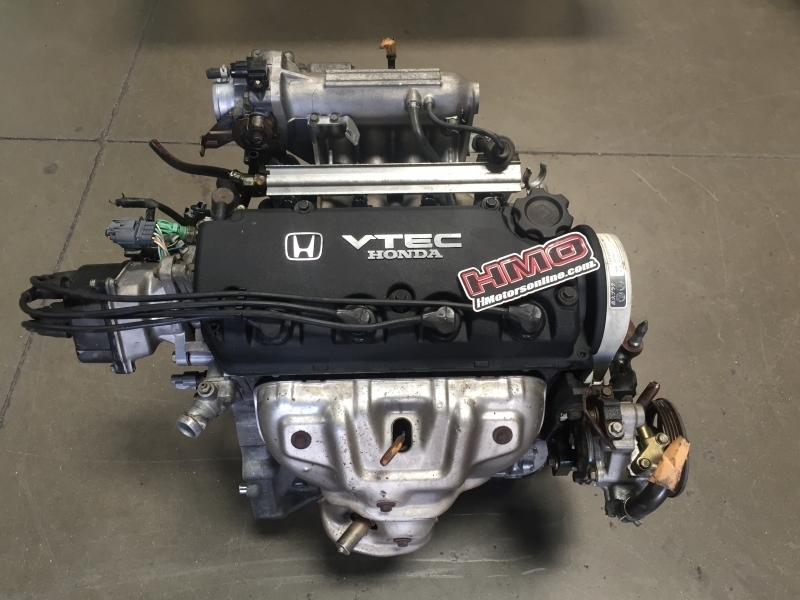
I am so confused. This engine looks just like a D17, but it's apparently a D15B? WTF is this? Is it just a D17A with a different name or something? Maybe it was mislabeled?
Is something wrong?
Something you don't understand?
Is google (LINKYCLICK) not turned on in your area?
I did Google it. I was only finding D15B engines like this. When they are called the same thing but are clearly different, how do I know which one they are talking about?
3-Stage VTEC is a version that employs three different cam profiles to control intake valve timing and lift. Due to this version of VTEC being designed around a SOHC valve head, space was limited; so VTEC can modify only the opening and closing of the intake valves. The low-end fuel economy improvements of VTEC-E and the performance of conventional VTEC are combined in this application. From idle to 2500-3000 RPM, depending on load conditions, one intake valve fully opens while the other opens just slightly, enough to prevent pooling of fuel behind the valve, also called 12-valve mode. This 12 Valve mode results in swirl of the intake charge which increases combustion efficiency, resulting in improved low end torque and better fuel economy. At 3000-5400 RPM, depending on load, one of the VTEC solenoids engages, which causes the second valve to lock onto the first valve's camshaft lobe. Also called 16-valve mode, this method resembles a normal engine operating mode and improves the mid-range power curve. At 5500-7000 RPM, the second VTEC solenoid engages (both solenoids now engaged) so that both intake valves are using a middle, third camshaft lobe. The third lobe is tuned for high-performance and provides peak power at the top end of the RPM range.
Found in:
1995–1998 Honda Civic Ferio Vi (EK3, Japanese market)
3-Stage VTEC is a version that employs three different cam profiles to control intake valve timing and lift. Due to this version of VTEC being designed around a SOHC valve head, space was limited; so VTEC can modify only the opening and closing of the intake valves. The low-end fuel economy improvements of VTEC-E and the performance of conventional VTEC are combined in this application. From idle to 2500-3000 RPM, depending on load conditions, one intake valve fully opens while the other opens just slightly, enough to prevent pooling of fuel behind the valve, also called 12-valve mode. This 12 Valve mode results in swirl of the intake charge which increases combustion efficiency, resulting in improved low end torque and better fuel economy. At 3000-5400 RPM, depending on load, one of the VTEC solenoids engages, which causes the second valve to lock onto the first valve's camshaft lobe. Also called 16-valve mode, this method resembles a normal engine operating mode and improves the mid-range power curve. At 5500-7000 RPM, the second VTEC solenoid engages (both solenoids now engaged) so that both intake valves are using a middle, third camshaft lobe. The third lobe is tuned for high-performance and provides peak power at the top end of the RPM range.
Found in:
1995–1998 Honda Civic Ferio Vi (EK3, Japanese market)
If you think a good mechanic is expensive, try hiring a bad one
Joined: Dec 2011
Posts: 32,017
Likes: 256
From: Midwest. Aiming about mid-chest
Rep Power: 519
Re: WTF is this engine?
Oh, I was looking at the one with the black valve cover.
D15x looks like your D17x because it's of the same engine family and probably even similar years, just smaller displacement version that was used in other world markets. That engine was never used in the USA.
Oh, I was looking at the one with the black valve cover.
D15x looks like your D17x because it's of the same engine family and probably even similar years, just smaller displacement version that was used in other world markets. That engine was never used in the USA.
I see. That makes sense. Thanks. Any idea where I could find specs for it?



 . I saw a lot during my high school years.



 This section does not cite any sources. Please help improve this section by adding citations to reliable sources. Unsourced material may be challenged and removed. (July 2013) (Learn how and when to remove this template message)
 This section does not cite any sources. Please help improve this section by adding citations to reliable sources. Unsourced material may be challenged and removed. (July 2013) (Learn how and when to remove this template message)
