


First post! And.. issue. My 1995 Honda Civic..


Thread Starter
Registered!!
Joined: May 2015
Posts: 299
Likes: 0
Rep Power: 0 
Re: First post! And.. issue. My 1995 Honda Civic..
(*oh man. Am.i doing anything wrong? Seeking video EMBED... Some times it does and sometimes it doesn't. Weird..)
Updates and progress. Slow but sure, focus is on not BREAKING anything:
https://www.youtube.com/watch?v=aHX-Si1Xf0o
Updates and progress. Slow but sure, focus is on not BREAKING anything:
https://www.youtube.com/watch?v=aHX-Si1Xf0o

If you think a good mechanic is expensive, try hiring a bad one
Joined: Dec 2011
Posts: 32,017
Likes: 256
From: Midwest. Aiming about mid-chest
Rep Power: 518 

Re: First post! And.. issue. My 1995 Honda Civic..
I see you are removing the hardware that attaches the intake manifold to the head.
7 hours ago. Not sure how far you got since then.....
There are also support brackets on the bottom of the intake manifold that need to be loosened so the manifold can be pushed away from the head.
I would loosen only the bolts securing the bottom of the brackets to the engine block,
loosen them several turns but do not remove them completely,
leave them screwed into the block a few turns
....(and don't touch the fasteners at the top of the brackets at all)
then the manifold should simply push away from the head, and pivot on those loosened bolts.
This way the manifold should not drop down, and this should speed up alignment and assembly later.
7 hours ago. Not sure how far you got since then.....
There are also support brackets on the bottom of the intake manifold that need to be loosened so the manifold can be pushed away from the head.
I would loosen only the bolts securing the bottom of the brackets to the engine block,
loosen them several turns but do not remove them completely,
leave them screwed into the block a few turns
....(and don't touch the fasteners at the top of the brackets at all)
then the manifold should simply push away from the head, and pivot on those loosened bolts.
This way the manifold should not drop down, and this should speed up alignment and assembly later.
Thread Starter
Registered!!
Joined: May 2015
Posts: 299
Likes: 0
Rep Power: 0 Re: First post! And.. issue. My 1995 Honda Civic..
Still going ahead with remedying the car's ills before it rolls again.
I took more bolts off, towards getting head off.

Also trying to clean as I go.
Embed.
I took more bolts off, towards getting head off.
Also trying to clean as I go.
Embed.
If you think a good mechanic is expensive, try hiring a bad one
Joined: Dec 2011
Posts: 32,017
Likes: 256
From: Midwest. Aiming about mid-chest
Rep Power: 518 Re: First post! And.. issue. My 1995 Honda Civic..
At 1:40 that's the ABS pump and brake lines, not fuel.
Fuel comes from the tank, follows the frame rail forward, then comes up around the transmission, upward to the back of the engine. Follow your lines.
-----------------
Got several thoughts on the Blazer here.......
-----------------
I don't have a wiring diagram for the blazer in front of me, so if I were addressing your request I would---
Disconnect the set of small wires from the ignition coil to disable spark.
I might go to the top of the fuel tank to unplug the wire harness for the fuel pump.
If I had a wiring diagram I might find an easier way, but there's too many unanswered questions without an accurate diagram.
Maybe one of the lurkers can send a good diagram?
---------
But wait, there's more!
---------
You gotta put it together anyway, so.....
If you go ahead and install the new lines and injector and whatnot inside the manifold and then finish assembling it, you shouldn't have to worry about disabling the fuel pump as the lines will no longer be "wide open" to shoot gas all over the place.
OK, next step:
The Blazer has been sitting for a while like that, right? A month or longer?
Don't remove spark plugs yet.
I'm thinking it has been sitting still long enough that any raw liquid gasoline in the cylinders has had plenty of time to seep past the rings and into the crankcase.
SO...
With the top half all put together,
I'd "bar the engine over by hand" as soon as the intake is back together.
(Note: 'Bar the engine over by hand' means using hand tools to turn the crankshaft either directly or via the accessory belt...you probably won't be able to turn the crankshaft pulley with your bare hands unless you are a real animal!!!)
OK so if you can turn the crankshaft more than 2 complete revolutions by hand in the direction of normal rotation, that means it is not currently hydrolocked and you can safely crank the engine with the starter.
NOTE1: If the crankshaft will not turn two complete revolutions by hand, now you need to take the spark plugs out and continue with your previous plan.
NOTE2: If the fuel supply line inside the manifold cracked open, the rear two cylinders on the drivers side are the most likely ones that filled of gas.
NOTE3: I hope when you discovered the problem it wasn't because it locked up against the starter, nor locked while running. That could have tweaked a connecting rod.
Assuming it was able to turn more than two complete revolutions by hand....go ahead and crank it with the starter.
It should start and run at that point---- it may struggle and fight, you may need to work the gas pedal to get it going...but it should be able to start, and then fairly quickly clear itself out and run normally.
The oil will probably need to be changed ASAP due to being loaded with gasoline.
AFTER it is able to run on its own, and has been warmed up and had the oil changed, then you can pull plugs and do your compression test and whatever else you want.
If you try to do a compression test on it right now as it sits or after you spin it over, the test results will be very misleading because the fuel that's been in the cylinders has washed down the oil film from the cylinder walls and rings. It NEEDS to be run before you try a compression test.
If it ends up running smooth, I might not bother with a compression test at all.
----
----
----
----
On the intake in the Civic, my personal preference is to unbolt and leave the intake manifold in the car.
Others may leave it attached to the head and take it all out at once.
----
You can't get under the car?
You should be able to get under it if and when you need to.
Buy a set of jack stands so it can be supported safely enough to lay under the car.
Roll it to flat ground.
Use the jack in the trunk to jack it up?
Use wheel chocks (wedges) at the rear tires so it cannot possibly roll any further.
Fuel comes from the tank, follows the frame rail forward, then comes up around the transmission, upward to the back of the engine. Follow your lines.
-----------------
Got several thoughts on the Blazer here.......
-----------------
I don't have a wiring diagram for the blazer in front of me, so if I were addressing your request I would---
Disconnect the set of small wires from the ignition coil to disable spark.
I might go to the top of the fuel tank to unplug the wire harness for the fuel pump.
If I had a wiring diagram I might find an easier way, but there's too many unanswered questions without an accurate diagram.
Maybe one of the lurkers can send a good diagram?
---------
But wait, there's more!
---------
You gotta put it together anyway, so.....
If you go ahead and install the new lines and injector and whatnot inside the manifold and then finish assembling it, you shouldn't have to worry about disabling the fuel pump as the lines will no longer be "wide open" to shoot gas all over the place.
OK, next step:
The Blazer has been sitting for a while like that, right? A month or longer?
Don't remove spark plugs yet.
I'm thinking it has been sitting still long enough that any raw liquid gasoline in the cylinders has had plenty of time to seep past the rings and into the crankcase.
SO...
With the top half all put together,
I'd "bar the engine over by hand" as soon as the intake is back together.
(Note: 'Bar the engine over by hand' means using hand tools to turn the crankshaft either directly or via the accessory belt...you probably won't be able to turn the crankshaft pulley with your bare hands unless you are a real animal!!!)
OK so if you can turn the crankshaft more than 2 complete revolutions by hand in the direction of normal rotation, that means it is not currently hydrolocked and you can safely crank the engine with the starter.
NOTE1: If the crankshaft will not turn two complete revolutions by hand, now you need to take the spark plugs out and continue with your previous plan.
NOTE2: If the fuel supply line inside the manifold cracked open, the rear two cylinders on the drivers side are the most likely ones that filled of gas.
NOTE3: I hope when you discovered the problem it wasn't because it locked up against the starter, nor locked while running. That could have tweaked a connecting rod.
Assuming it was able to turn more than two complete revolutions by hand....go ahead and crank it with the starter.
It should start and run at that point---- it may struggle and fight, you may need to work the gas pedal to get it going...but it should be able to start, and then fairly quickly clear itself out and run normally.
The oil will probably need to be changed ASAP due to being loaded with gasoline.
AFTER it is able to run on its own, and has been warmed up and had the oil changed, then you can pull plugs and do your compression test and whatever else you want.
If you try to do a compression test on it right now as it sits or after you spin it over, the test results will be very misleading because the fuel that's been in the cylinders has washed down the oil film from the cylinder walls and rings. It NEEDS to be run before you try a compression test.
If it ends up running smooth, I might not bother with a compression test at all.
----
----
----
----
On the intake in the Civic, my personal preference is to unbolt and leave the intake manifold in the car.
Others may leave it attached to the head and take it all out at once.
----
You can't get under the car?
You should be able to get under it if and when you need to.
Buy a set of jack stands so it can be supported safely enough to lay under the car.
Roll it to flat ground.
Use the jack in the trunk to jack it up?
Use wheel chocks (wedges) at the rear tires so it cannot possibly roll any further.
Last edited by ezone; Jun 22, 2015 at 08:51 PM.
Thread Starter
Registered!!
Joined: May 2015
Posts: 299
Likes: 0
Rep Power: 0 Re: First post! And.. issue. My 1995 Honda Civic..
At 1:40 that's the ABS pump and brake lines, not fuel.
Fuel comes from the tank, follows the frame rail forward, then comes up around the transmission, upward to the back of the engine. Follow your lines.
-----------------
Got several thoughts on the Blazer here.......
-----------------
I don't have a wiring diagram for the blazer in front of me, so if I were addressing your request I would---
Disconnect the set of small wires from the ignition coil to disable spark.
I might go to the top of the fuel tank to unplug the wire harness for the fuel pump.
If I had a wiring diagram I might find an easier way, but there's too many unanswered questions without an accurate diagram.
Maybe one of the lurkers can send a good diagram?
---------
But wait, there's more!
---------
You gotta put it together anyway, so.....
If you go ahead and install the new lines and injector and whatnot inside the manifold and then finish assembling it, you shouldn't have to worry about disabling the fuel pump as the lines will no longer be "wide open" to shoot gas all over the place.
OK, next step:
The Blazer has been sitting for a while like that, right? A month or longer?
Don't remove spark plugs yet.
I'm thinking it has been sitting still long enough that any raw liquid gasoline in the cylinders has had plenty of time to seep past the rings and into the crankcase.
SO...
With the top half all put together,
I'd "bar the engine over by hand" as soon as the intake is back together.
(Note: 'Bar the engine over by hand' means using hand tools to turn the crankshaft either directly or via the accessory belt...you probably won't be able to turn the crankshaft pulley with your bare hands unless you are a real animal!!!)
OK so if you can turn the crankshaft more than 2 complete revolutions by hand in the direction of normal rotation, that means it is not currently hydrolocked and you can safely crank the engine with the starter.
NOTE1: If the crankshaft will not turn two complete revolutions by hand, now you need to take the spark plugs out and continue with your previous plan.
NOTE2: If the fuel supply line inside the manifold cracked open, the rear two cylinders on the drivers side are the most likely ones that filled of gas.
NOTE3: I hope when you discovered the problem it wasn't because it locked up against the starter, nor locked while running. That could have tweaked a connecting rod.
Assuming it was able to turn more than two complete revolutions by hand....go ahead and crank it with the starter.
It should start and run at that point---- it may struggle and fight, you may need to work the gas pedal to get it going...but it should be able to start, and then fairly quickly clear itself out and run normally.
The oil will probably need to be changed ASAP due to being loaded with gasoline.
AFTER it is able to run on its own, and has been warmed up and had the oil changed, then you can pull plugs and do your compression test and whatever else you want.
If you try to do a compression test on it right now as it sits or after you spin it over, the test results will be very misleading because the fuel that's been in the cylinders has washed down the oil film from the cylinder walls and rings. It NEEDS to be run before you try a compression test.
If it ends up running smooth, I might not bother with a compression test at all.
----
----
----
----
On the intake in the Civic, my personal preference is to unbolt and leave the intake manifold in the car.
Others may leave it attached to the head and take it all out at once.
----
You can't get under the car?
You should be able to get under it if and when you need to.
Buy a set of jack stands so it can be supported safely enough to lay under the car.
Roll it to flat ground.
Use the jack in the trunk to jack it up?
Use wheel chocks (wedges) at the rear tires so it cannot possibly roll any further.
Fuel comes from the tank, follows the frame rail forward, then comes up around the transmission, upward to the back of the engine. Follow your lines.
-----------------
Got several thoughts on the Blazer here.......
-----------------
I don't have a wiring diagram for the blazer in front of me, so if I were addressing your request I would---
Disconnect the set of small wires from the ignition coil to disable spark.
I might go to the top of the fuel tank to unplug the wire harness for the fuel pump.
If I had a wiring diagram I might find an easier way, but there's too many unanswered questions without an accurate diagram.
Maybe one of the lurkers can send a good diagram?
---------
But wait, there's more!
---------
You gotta put it together anyway, so.....
If you go ahead and install the new lines and injector and whatnot inside the manifold and then finish assembling it, you shouldn't have to worry about disabling the fuel pump as the lines will no longer be "wide open" to shoot gas all over the place.
OK, next step:
The Blazer has been sitting for a while like that, right? A month or longer?
Don't remove spark plugs yet.
I'm thinking it has been sitting still long enough that any raw liquid gasoline in the cylinders has had plenty of time to seep past the rings and into the crankcase.
SO...
With the top half all put together,
I'd "bar the engine over by hand" as soon as the intake is back together.
(Note: 'Bar the engine over by hand' means using hand tools to turn the crankshaft either directly or via the accessory belt...you probably won't be able to turn the crankshaft pulley with your bare hands unless you are a real animal!!!)
OK so if you can turn the crankshaft more than 2 complete revolutions by hand in the direction of normal rotation, that means it is not currently hydrolocked and you can safely crank the engine with the starter.
NOTE1: If the crankshaft will not turn two complete revolutions by hand, now you need to take the spark plugs out and continue with your previous plan.
NOTE2: If the fuel supply line inside the manifold cracked open, the rear two cylinders on the drivers side are the most likely ones that filled of gas.
NOTE3: I hope when you discovered the problem it wasn't because it locked up against the starter, nor locked while running. That could have tweaked a connecting rod.
Assuming it was able to turn more than two complete revolutions by hand....go ahead and crank it with the starter.
It should start and run at that point---- it may struggle and fight, you may need to work the gas pedal to get it going...but it should be able to start, and then fairly quickly clear itself out and run normally.
The oil will probably need to be changed ASAP due to being loaded with gasoline.
AFTER it is able to run on its own, and has been warmed up and had the oil changed, then you can pull plugs and do your compression test and whatever else you want.
If you try to do a compression test on it right now as it sits or after you spin it over, the test results will be very misleading because the fuel that's been in the cylinders has washed down the oil film from the cylinder walls and rings. It NEEDS to be run before you try a compression test.
If it ends up running smooth, I might not bother with a compression test at all.
----
----
----
----
On the intake in the Civic, my personal preference is to unbolt and leave the intake manifold in the car.
Others may leave it attached to the head and take it all out at once.
----
You can't get under the car?
You should be able to get under it if and when you need to.
Buy a set of jack stands so it can be supported safely enough to lay under the car.
Roll it to flat ground.
Use the jack in the trunk to jack it up?
Use wheel chocks (wedges) at the rear tires so it cannot possibly roll any further.
I have some info for you! Below:
**THE WEAK STARTING WAS CONFIRMED TO BE A WEAK BATTERY.
***How can something "partially hydrolock?"
.. and. Those plugs: *Laid out the same way the engine is, looking at it from the front of the truck.. if that makes sense.


Please pardon the cat hair on the last two pics.
ANd the removal of those plugs.. Brings us to where I am. *Since I have to blow crud out of the cylinders. There has been many a thing sit in the cylinders. This I know.
Thread Starter
Registered!!
Joined: May 2015
Posts: 299
Likes: 0
Rep Power: 0 Re: First post! And.. issue. My 1995 Honda Civic..
NOTE2: If the fuel supply line inside the manifold cracked open, the rear two cylinders on the drivers side are the most likely ones that filled of gas.
And excellent notes on compression test. Very good points.
What could be causing oil to get into a cylinder? Could it be some valve cover molarchy? (*I ask because I remember when the engine went in.)
I also have fresh oil in there, and a change ready to go after it circulates. This engine got beat up, for sure, but redemption is at hand!
Thread Starter
Registered!!
Joined: May 2015
Posts: 299
Likes: 0
Rep Power: 0 Re: First post! And.. issue. My 1995 Honda Civic..
Are these what I am going to need for the Blazer ?
http://www.ebay.com/itm/Central-Port-Injection-Fuel-Return-Lines-SET-for-Chevy-GMC-Pickup-Truck-V6-4-3L-/370929676296?hash=item565d21b008&vxp=mtr

http://www.ebay.com/itm/Central-Port-Injection-Fuel-Return-Lines-SET-for-Chevy-GMC-Pickup-Truck-V6-4-3L-/370929676296?hash=item565d21b008&vxp=mtr
If you think a good mechanic is expensive, try hiring a bad one
Joined: Dec 2011
Posts: 32,017
Likes: 256
From: Midwest. Aiming about mid-chest
Rep Power: 518 Re: First post! And.. issue. My 1995 Honda Civic..
I can't believe what I just saw. Is the coil completely disabled?
I didn't realize you are still trying to fill the intake with gas. Forget about half of what I typed earlier.
Quit turning the key on, the fuel pump runs for 2 seconds every time you do that. Don't even try until you have the fuel lines fixed correctly.
The one plug all covered in goo might be drinking and burning oil. See if that same cylinder eats another plug in the near future.
Fuel line nut kit? I don't remember but that's probably it. I just remember they liked to break the plastic tubing inside the manifold and cause all sorts of problems.
Man, it's been probably 15 years or longer since I've even touched one of those old GMs. *shudder*
I didn't realize you are still trying to fill the intake with gas. Forget about half of what I typed earlier.
Quit turning the key on, the fuel pump runs for 2 seconds every time you do that. Don't even try until you have the fuel lines fixed correctly.
The one plug all covered in goo might be drinking and burning oil. See if that same cylinder eats another plug in the near future.
Fuel line nut kit? I don't remember but that's probably it. I just remember they liked to break the plastic tubing inside the manifold and cause all sorts of problems.
Man, it's been probably 15 years or longer since I've even touched one of those old GMs. *shudder*
Thread Starter
Registered!!
Joined: May 2015
Posts: 299
Likes: 0
Rep Power: 0 Re: First post! And.. issue. My 1995 Honda Civic..
I can't believe what I just saw. Is the coil completely disabled?
I didn't realize you are still trying to fill the intake with gas. Forget about half of what I typed earlier.
Quit turning the key on, the fuel pump runs for 2 seconds every time you do that. Don't even try until you have the fuel lines fixed correctly.
The one plug all covered in goo might be drinking and burning oil. See if that same cylinder eats another plug in the near future.
Fuel line nut kit? I don't remember but that's probably it. I just remember they liked to break the plastic tubing inside the manifold and cause all sorts of problems.
Man, it's been probably 15 years or longer since I've even touched one of those old GMs. *shudder*
I didn't realize you are still trying to fill the intake with gas. Forget about half of what I typed earlier.
Quit turning the key on, the fuel pump runs for 2 seconds every time you do that. Don't even try until you have the fuel lines fixed correctly.
The one plug all covered in goo might be drinking and burning oil. See if that same cylinder eats another plug in the near future.
Fuel line nut kit? I don't remember but that's probably it. I just remember they liked to break the plastic tubing inside the manifold and cause all sorts of problems.
Man, it's been probably 15 years or longer since I've even touched one of those old GMs. *shudder*
 and
and  .. The idiot "helper" mechanic caused a small fire. (Yes.. O
  N THE GAS LINE.) I was really f*****g lucky. What you see is a NEW Spider unit, with NEW FPR.. and a charred line or two. So they need to be replaced...
Now you see my questions about disabling spark and why I say "yes I know there is stuff down in there."
As to the GM thing.. My first time.

I can't wait until the sun comes up.
And that COULD be a feasible idea.. long-ish line, on the end of the one you saw spit. Into a pail of sorts while clearing out cyls with no spark plugs in them.. put gas into the other GMC we have, since the Honda gas tank is full - go figure.
I think I can get both these cars right! What do you think?


If you think a good mechanic is expensive, try hiring a bad one
Joined: Dec 2011
Posts: 32,017
Likes: 256
From: Midwest. Aiming about mid-chest
Rep Power: 518 Re: First post! And.. issue. My 1995 Honda Civic..
Absolutely! Persevere! Succeed! You are far more determined than many that post LOL
Side note, water is not the way to put out a gasoline fire. Gas floats on top of water and will keep on burning. You need a "Class B" fire extinguisher.
Side note, water is not the way to put out a gasoline fire. Gas floats on top of water and will keep on burning. You need a "Class B" fire extinguisher.
If you think a good mechanic is expensive, try hiring a bad one
Joined: Dec 2011
Posts: 32,017
Likes: 256
From: Midwest. Aiming about mid-chest
Rep Power: 518 Re: First post! And.. issue. My 1995 Honda Civic..
ong-ish line, on the end of the one you saw spit. Into a pail
One line comes from the pump, the other is the return line to the tank. Connect them together.
Thread Starter
Registered!!
Joined: May 2015
Posts: 299
Likes: 0
Rep Power: 0 Re: First post! And.. issue. My 1995 Honda Civic..
Well... For obvious reasons, there is no video of the "gas lines fire." (Was not my idea, btw.) But.. I am still kinda stupefied how my truck doesn't look like I deposited a grenade in the engine bay.And are you describing a "Halon" extinguisher? .. We have some extinguishers around the house, but the hose saved my ***. I put it on "High flow." So it put out the flame.. That charred line is a souvenir.
I have only begun to fight. I am glad that you are actually giving me information I can use. Some people.. really are jerks, man. And yes, they get off on it.
Thread Starter
Registered!!
Joined: May 2015
Posts: 299
Likes: 0
Rep Power: 0 Re: First post! And.. issue. My 1995 Honda Civic..
 but yeah that would require a longer line, and be less safe...
See how clean the gas coming out was. And it SEEMED to have good pressure! But that's a good idea too.
So tomorrow will be WICKED hot, but should be the day...
If you think a good mechanic is expensive, try hiring a bad one
Joined: Dec 2011
Posts: 32,017
Likes: 256
From: Midwest. Aiming about mid-chest
Rep Power: 518 Re: First post! And.. issue. My 1995 Honda Civic..
Well... For obvious reasons, there is no video of the "gas lines fire." (Was not my idea, btw.) But.. I am still kinda stupefied how my truck doesn't look like I deposited a grenade in the engine bay.And are you describing a "Halon" extinguisher? .. We have some extinguishers around the house, but the hose saved my ***. I put it on "High flow." So it put out the flame.. That charred line is a souvenir.
Halon is good.
http://www.brkelectronics.com/faqs/oem/what-do-the-abc-ratings-mean-on-fire-extinguishers
http://www.h3rcleanagents.com/support_faq_2.htm
I have only begun to fight. I am glad that you are actually giving me information I can use. Some people.. really are jerks, man. And yes, they get off on it.
I have bad days too and would rather troll, but I try to refrain. It doesn't always work.
Thread Starter
Registered!!
Joined: May 2015
Posts: 299
Likes: 0
Rep Power: 0 Re: First post! And.. issue. My 1995 Honda Civic..
So far today...
1. I found the "bolt in the middle." Thankfully, Honda was kind enough to put a hole where the bolt is. My 12" extension gets to it, and I remember that it is 12mm. Today, I bought a flex joint to get my ratchet to turn the socket on the extension when I get it on there. And I should be just about home on this head job by then...
2. The Honda Heater Core is flushed, and flowing. It was really gunky.
3. (On the Blazer, I turned the engine with no plugs in and the video will give me a rough glance at what came out.)
Video ensues.
Part 1: (*Heads up: This got hella messy. But at 100+ today.. It was manageable.)
Part 2: (Better)
And, here is that Blazer video.
*Note to all watching: YES THERE WAS DEFINITELY WATER DOWN INSIDE THE CYLINDERS! AS WAS NOTED, IT GOT THERE IN EXTINGUISHING A FIRE FROM AN IDIOT HELPER MECHANIC. MAYBE I CAN DO ALL THIS MYSELF. ANYWAYS.. I ALSO PUT SOME MMO IN THERE OR "MARVEL MYSTERY OIL" AS A "PISTON SOAK" SO THAT WOULD EXPLAIN ANY RED STUFF. I ALSO BELIEVE WATER EVAPORATED, AS IT HAS BEEN HOT OUT HERE. I also should just leave that small puddle of MMO; When everything goes back on, I am sure it will get sucked in. Can't hurt. Won't do anything anyways.
So. How was that ?

1. I found the "bolt in the middle." Thankfully, Honda was kind enough to put a hole where the bolt is. My 12" extension gets to it, and I remember that it is 12mm. Today, I bought a flex joint to get my ratchet to turn the socket on the extension when I get it on there. And I should be just about home on this head job by then...
2. The Honda Heater Core is flushed, and flowing. It was really gunky.
3. (On the Blazer, I turned the engine with no plugs in and the video will give me a rough glance at what came out.)
Video ensues.
Part 1: (*Heads up: This got hella messy. But at 100+ today.. It was manageable.)
Part 2: (Better)
And, here is that Blazer video.
*Note to all watching: YES THERE WAS DEFINITELY WATER DOWN INSIDE THE CYLINDERS! AS WAS NOTED, IT GOT THERE IN EXTINGUISHING A FIRE FROM AN IDIOT HELPER MECHANIC. MAYBE I CAN DO ALL THIS MYSELF. ANYWAYS.. I ALSO PUT SOME MMO IN THERE OR "MARVEL MYSTERY OIL" AS A "PISTON SOAK" SO THAT WOULD EXPLAIN ANY RED STUFF. I ALSO BELIEVE WATER EVAPORATED, AS IT HAS BEEN HOT OUT HERE. I also should just leave that small puddle of MMO; When everything goes back on, I am sure it will get sucked in. Can't hurt. Won't do anything anyways.
So. How was that ?
If you think a good mechanic is expensive, try hiring a bad one
Joined: Dec 2011
Posts: 32,017
Likes: 256
From: Midwest. Aiming about mid-chest
Rep Power: 518 Re: First post! And.. issue. My 1995 Honda Civic..
On the heater flushing, make sure the water valve to the heater core is wide open.
The heater system should be able to flow liquid as fast as an average garden hose, so the rate of flow coming out of the heater should be roughly the same as whatever rate the water is going in. (It didn't look nearly as fast as the flow of the garden hose in your video, but maybe I'm not seeing it very well.)
I like to flush (pump liquid through) in both directions several times.
Um...I don't know is you have an air compressor or not, but Google 'Hecat Coolant Pulsator' and check it out. It's a flushing system, it pulsates water and compressed air to dislodge debris.
Also, city water pressure is usually much higher than what the car cooling system is designed to withstand, so I don't want a tight seal when I do it. I want it to be able to bleed pressure in the event the core is blocked.
So, I butt the garden hose spray nozzle up to the end of the heater hose then wrap a rag around both and hold it with my hand. This way it's very loosely sealed and won't (shouldn't) accidentally pop a hole the heater core.
Blazer: Wow there was a lot of crap in there.
The heater system should be able to flow liquid as fast as an average garden hose, so the rate of flow coming out of the heater should be roughly the same as whatever rate the water is going in. (It didn't look nearly as fast as the flow of the garden hose in your video, but maybe I'm not seeing it very well.)
I like to flush (pump liquid through) in both directions several times.
Um...I don't know is you have an air compressor or not, but Google 'Hecat Coolant Pulsator' and check it out. It's a flushing system, it pulsates water and compressed air to dislodge debris.
Also, city water pressure is usually much higher than what the car cooling system is designed to withstand, so I don't want a tight seal when I do it. I want it to be able to bleed pressure in the event the core is blocked.
So, I butt the garden hose spray nozzle up to the end of the heater hose then wrap a rag around both and hold it with my hand. This way it's very loosely sealed and won't (shouldn't) accidentally pop a hole the heater core.
Blazer: Wow there was a lot of crap in there.
Thread Starter
Registered!!
Joined: May 2015
Posts: 299
Likes: 0
Rep Power: 0 Re: First post! And.. issue. My 1995 Honda Civic..
On the heater flushing, make sure the water valve to the heater core is wide open.
The heater system should be able to flow liquid as fast as an average garden hose, so the rate of flow coming out of the heater should be roughly the same as whatever rate the water is going in. (It didn't look nearly as fast as the flow of the garden hose in your video, but maybe I'm not seeing it very well.)
I like to flush (pump liquid through) in both directions several times.
Um...I don't know is you have an air compressor or not, but Google 'Hecat Coolant Pulsator' and check it out. It's a flushing system, it pulsates water and compressed air to dislodge debris.
Also, city water pressure is usually much higher than what the car cooling system is designed to withstand, so I don't want a tight seal when I do it. I want it to be able to bleed pressure in the event the core is blocked.
So, I butt the garden hose spray nozzle up to the end of the heater hose then wrap a rag around both and hold it with my hand. This way it's very loosely sealed and won't (shouldn't) accidentally pop a hole the heater core.
Blazer: Wow there was a lot of crap in there.
The heater system should be able to flow liquid as fast as an average garden hose, so the rate of flow coming out of the heater should be roughly the same as whatever rate the water is going in. (It didn't look nearly as fast as the flow of the garden hose in your video, but maybe I'm not seeing it very well.)
I like to flush (pump liquid through) in both directions several times.
Um...I don't know is you have an air compressor or not, but Google 'Hecat Coolant Pulsator' and check it out. It's a flushing system, it pulsates water and compressed air to dislodge debris.
Also, city water pressure is usually much higher than what the car cooling system is designed to withstand, so I don't want a tight seal when I do it. I want it to be able to bleed pressure in the event the core is blocked.
So, I butt the garden hose spray nozzle up to the end of the heater hose then wrap a rag around both and hold it with my hand. This way it's very loosely sealed and won't (shouldn't) accidentally pop a hole the heater core.
Blazer: Wow there was a lot of crap in there.
Starting to think some kind of "blend door" is half shut. However, I DID achieve flow today!
It came out like chocolate milkshake. And my camera was off when it did. I was getting super-soaked, since the core WAS blocked and plenty of water came at me. As you saw.. Good thing it was 104 degrees out. If you think a good mechanic is expensive, try hiring a bad one
Joined: Dec 2011
Posts: 32,017
Likes: 256
From: Midwest. Aiming about mid-chest
Rep Power: 518 Thread Starter
Registered!!
Joined: May 2015
Posts: 299
Likes: 0
Rep Power: 0 Re: First post! And.. issue. My 1995 Honda Civic..
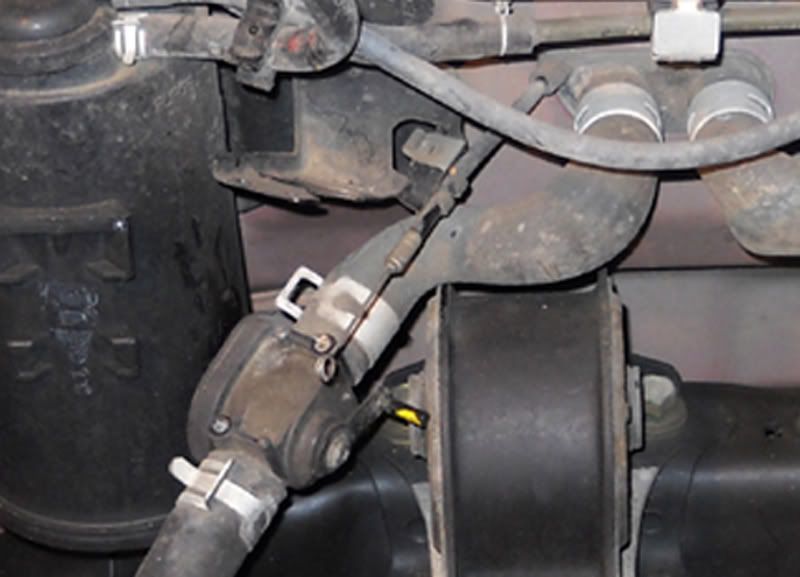
I still have the Oreo Cookie Chocolate Mudslide Milkshake that came out..


Thread Starter
Registered!!
Joined: May 2015
Posts: 299
Likes: 0
Rep Power: 0 Re: First post! And.. issue. My 1995 Honda Civic..
*for that "weird stuff" I mentioned: I was referring to the "misting" you could see in the first two cranks.
Now is it just me, or does that starter start to slow down kinda fast. Or is that normal. ?
And I'm STILL not 100% on how it could have been "partially hydrolocked." the "5 cylinders" comment makes sense.. it probably was...
Thread Starter
Registered!!
Joined: May 2015
Posts: 299
Likes: 0
Rep Power: 0 Re: First post! And.. issue. My 1995 Honda Civic..
I did this a 5th time.. Blazer. (1994 S-10 4.3 VIN W.) I kind of think the liquid coming out is gasoline, since it doesn't stay where it is for very long. It is either that or water. What do you think?
If you think a good mechanic is expensive, try hiring a bad one
Joined: Dec 2011
Posts: 32,017
Likes: 256
From: Midwest. Aiming about mid-chest
Rep Power: 518 Re: First post! And.. issue. My 1995 Honda Civic..
I can't keep up with all your videos LOL
Vid 1 if you can undo the battery cables and terminals by hand, they are not going to give good contact. The loose fit can overheat during high amp load (cranking) and melt things at the point of highest resistance, or poor contact.
Cranking speed may slow down when the lube system builds oil pressure and the oil warning light goes out.
Cranking speed will slow down as the battery gets weaker.
You need to recharge it after every use, same as the alternator would if it ran each time you cranked it.
Charge up the battery, a few hours with a trickle charger may be best.
Leaving the battery to sit in a weakened state of charge can lead to premature demise.
Tighten the connections (post adapters) with a wrench first.
Are the cylinders accumulating more liquid as it sits overnight? What is the liquid? (water, antifreeze, or fuel??) Maybe not. Maybe it just hasn't blown all the liquid out yet. IDK.
Where you say to watch next to the truck, I assume you see a vapor cloud from whatever is blowing out of the cylinders.
------
Vid2 cranking at 0;45 I dont' see any more stuff coming out of the cylinders.
===
Vid3....*sigh* all you really needed was to get the majority of the liquid out so it wouldn't hydrolock.
Vid 4 OH you ARE charging the battery LOL
Still gettin liquid?...smell it, taste it, see if it will light on fire (DON'T light it in the engine compartment).
Has it been losing antifreeze? Is the fuel line loop leaking?
Is this the cylinder that had the nasty looking plug?
*more cranking*
Um, nuthin now?
Screw the plugs back in. Or leave em out til it's together. Quit cranking it, wait until you get the top half back together before you crank it again.
Charge battery.
Vid 1 if you can undo the battery cables and terminals by hand, they are not going to give good contact. The loose fit can overheat during high amp load (cranking) and melt things at the point of highest resistance, or poor contact.
Cranking speed may slow down when the lube system builds oil pressure and the oil warning light goes out.
Cranking speed will slow down as the battery gets weaker.
You need to recharge it after every use, same as the alternator would if it ran each time you cranked it.
Charge up the battery, a few hours with a trickle charger may be best.
Leaving the battery to sit in a weakened state of charge can lead to premature demise.
Tighten the connections (post adapters) with a wrench first.
Are the cylinders accumulating more liquid as it sits overnight? What is the liquid? (water, antifreeze, or fuel??) Maybe not. Maybe it just hasn't blown all the liquid out yet. IDK.
Where you say to watch next to the truck, I assume you see a vapor cloud from whatever is blowing out of the cylinders.
------
Vid2 cranking at 0;45 I dont' see any more stuff coming out of the cylinders.
===
Vid3....*sigh* all you really needed was to get the majority of the liquid out so it wouldn't hydrolock.
Vid 4 OH you ARE charging the battery LOL
Still gettin liquid?...smell it, taste it, see if it will light on fire (DON'T light it in the engine compartment).
Has it been losing antifreeze? Is the fuel line loop leaking?
Is this the cylinder that had the nasty looking plug?
*more cranking*
Um, nuthin now?
Screw the plugs back in. Or leave em out til it's together. Quit cranking it, wait until you get the top half back together before you crank it again.
Charge battery.
Thread Starter
Registered!!
Joined: May 2015
Posts: 299
Likes: 0
Rep Power: 0 Re: First post! And.. issue. My 1995 Honda Civic..
I can't keep up with all your videos LOL
Vid 1 if you can undo the battery cables and terminals by hand, they are not going to give good contact. The loose fit can overheat during high amp load (cranking) and melt things at the point of highest resistance, or poor contact.
Cranking speed may slow down when the lube system builds oil pressure and the oil warning light goes out.
Cranking speed will slow down as the battery gets weaker.
You need to recharge it after every use, same as the alternator would if it ran each time you cranked it.
Charge up the battery, a few hours with a trickle charger may be best.
Leaving the battery to sit in a weakened state of charge can lead to premature demise.
Tighten the connections (post adapters) with a wrench first.
Are the cylinders accumulating more liquid as it sits overnight? What is the liquid? (water, antifreeze, or fuel??) Maybe not. Maybe it just hasn't blown all the liquid out yet. IDK.
Where you say to watch next to the truck, I assume you see a vapor cloud from whatever is blowing out of the cylinders.
------
Vid2 cranking at 0;45 I dont' see any more stuff coming out of the cylinders.
===
Vid3....*sigh* all you really needed was to get the majority of the liquid out so it wouldn't hydrolock.
Vid 4 OH you ARE charging the battery LOL
Still gettin liquid?...smell it, taste it, see if it will light on fire (DON'T light it in the engine compartment).
Has it been losing antifreeze? Is the fuel line loop leaking?
Is this the cylinder that had the nasty looking plug?
*more cranking*
Um, nuthin now?
Screw the plugs back in. Or leave em out til it's together. Quit cranking it, wait until you get the top half back together before you crank it again.
Charge battery.
Vid 1 if you can undo the battery cables and terminals by hand, they are not going to give good contact. The loose fit can overheat during high amp load (cranking) and melt things at the point of highest resistance, or poor contact.
Cranking speed may slow down when the lube system builds oil pressure and the oil warning light goes out.
Cranking speed will slow down as the battery gets weaker.
You need to recharge it after every use, same as the alternator would if it ran each time you cranked it.
Charge up the battery, a few hours with a trickle charger may be best.
Leaving the battery to sit in a weakened state of charge can lead to premature demise.
Tighten the connections (post adapters) with a wrench first.
Are the cylinders accumulating more liquid as it sits overnight? What is the liquid? (water, antifreeze, or fuel??) Maybe not. Maybe it just hasn't blown all the liquid out yet. IDK.
Where you say to watch next to the truck, I assume you see a vapor cloud from whatever is blowing out of the cylinders.
------
Vid2 cranking at 0;45 I dont' see any more stuff coming out of the cylinders.
===
Vid3....*sigh* all you really needed was to get the majority of the liquid out so it wouldn't hydrolock.
Vid 4 OH you ARE charging the battery LOL
Still gettin liquid?...smell it, taste it, see if it will light on fire (DON'T light it in the engine compartment).
Has it been losing antifreeze? Is the fuel line loop leaking?
Is this the cylinder that had the nasty looking plug?
*more cranking*
Um, nuthin now?
Screw the plugs back in. Or leave em out til it's together. Quit cranking it, wait until you get the top half back together before you crank it again.
Charge battery.
Well it DID do its job. So that liquid coulda MAYBE been gas. IF there is a channel that lets it get to the other side in that intake manifold.....
Maybe it did dry up. One of those cylinders DID receive a HELL of a lot of water putting out that fire. And that mechanic owed me 90 bucks.. since it just occured to me that he burned up what cost me.. $90. So thats's on him...


Battery is on my CTEK MUS 4.3 now. And yes, I was talking about the mist.
Now I need another new g-----n spider. That's not fair to me. I busted my *** to get that money and my truck almost got blown up.
I can't wait for it to be tomorrow.
Thread Starter
Registered!!
Joined: May 2015
Posts: 299
Likes: 0
Rep Power: 0 Re: First post! And.. issue. My 1995 Honda Civic..
And how can an engine be "partially hydrolocked?" I thought cylinder linkages snapped from crankshafts if that were to happen. ..
Though, I am starting to think. On the Blazer, we have "Lower Intake Manifold Gaskets" and we have "Head Gaskets" - where it is my understanding that a LIMG leak can have same effect as an HG leak.
Sooo... Maybeeeee....
Oh, I bought some other extensions for the Honda, too. SHOULD BE ABLE TO GET THAT BOLT OFF AFTER MY NAP.
Though, I am starting to think. On the Blazer, we have "Lower Intake Manifold Gaskets" and we have "Head Gaskets" - where it is my understanding that a LIMG leak can have same effect as an HG leak.
Sooo... Maybeeeee....
Oh, I bought some other extensions for the Honda, too. SHOULD BE ABLE TO GET THAT BOLT OFF AFTER MY NAP.
If you think a good mechanic is expensive, try hiring a bad one
Joined: Dec 2011
Posts: 32,017
Likes: 256
From: Midwest. Aiming about mid-chest
Rep Power: 518 Re: First post! And.. issue. My 1995 Honda Civic..
Science 101: You cannot compress a liquid. If a cylinder fills with liquid, the piston will not be able to complete it stroke and will stop moving somewhere before it reaches the top of its stroke.
This part is hydrolock, or hydraulically locked. .
That's what can happen after a piston can no longer move. If this happens at a very slow RPM it might only stop the crankshaft from spinning, stop dead, and that's it. BUT....At higher RPM...The inertia of the spinning crankshaft, flywheel and all the other pistons still operating under power will force SOMETHING to give. It might bend a rod and continue to run (seen it, the rod looked like a banana) or break a rod in half and maybe punch a hole in the side of the block.
A PARTIAL lock might be when there's enough liquid to cause hidden damage? Like barely tweak a connecting rod (severely stress it) keep on running without noticeable symptoms, only to have it fracture completely at some point later on.
Pic of a Chrysler 3.6 connecting rod from a 14(?) Challenger that tried to navigate a flooded underpass:
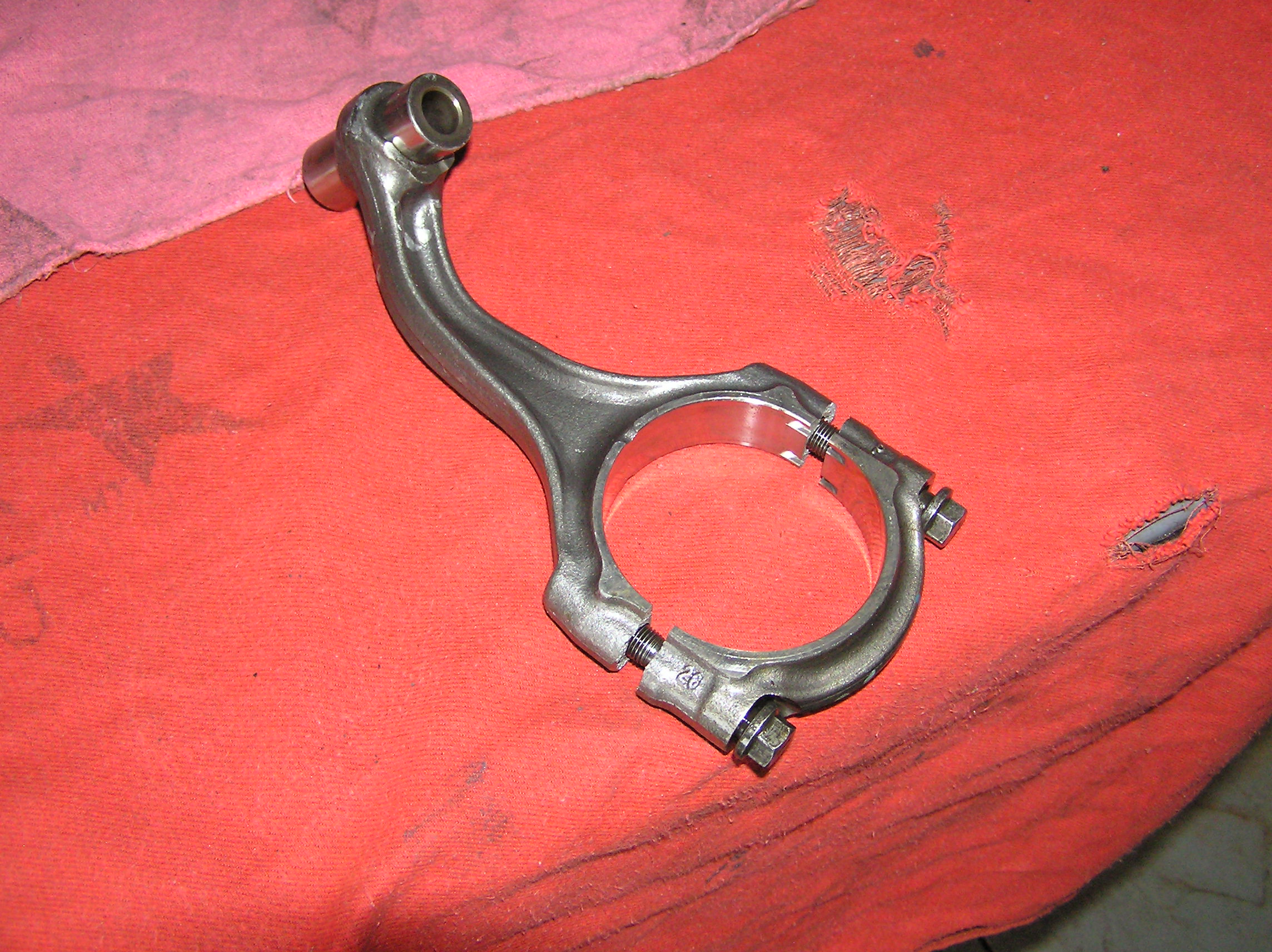
This one shattered the piston and wedged it in the top of the cylinder, and ruined the block by damaging the cylinder but did not punch a hole through the block. The intake manifold, air filter and tubing, and some other cylinders were full of water.
Intake manifold gasket leakage could allow the cooling system to leak into the intake ports and/or crankcase. This is why I asked if it has been losing coolant from the radiator (and/or reservoir bottle). And antifreeze usually tastes sweet, that's why I said taste what was coming out of the cylinder(s) if you couldn't identify the liquid any other way. Do not swallow though, it's poisonous.
You know you're getting old when you wake up from a nap you didn't intend to take.
This part is hydrolock, or hydraulically locked. .
I thought cylinder linkages snapped from crankshafts if that were to happen. ..
A PARTIAL lock might be when there's enough liquid to cause hidden damage? Like barely tweak a connecting rod (severely stress it) keep on running without noticeable symptoms, only to have it fracture completely at some point later on.
Pic of a Chrysler 3.6 connecting rod from a 14(?) Challenger that tried to navigate a flooded underpass:
This one shattered the piston and wedged it in the top of the cylinder, and ruined the block by damaging the cylinder but did not punch a hole through the block. The intake manifold, air filter and tubing, and some other cylinders were full of water.
Though, I am starting to think. On the Blazer, we have "Lower Intake Manifold Gaskets" and we have "Head Gaskets" - where it is my understanding that a LIMG leak can have same effect as an HG leak.
AFTER MY NAP.
Last edited by ezone; Jun 25, 2015 at 12:50 PM.
Thread Starter
Registered!!
Joined: May 2015
Posts: 299
Likes: 0
Rep Power: 0 Re: First post! And.. issue. My 1995 Honda Civic..
Science 101: You cannot compress a liquid. If a cylinder fills with liquid, the piston will not be able to complete it stroke and will stop moving somewhere before it reaches the top of its stroke.
This part is hydrolock, or hydraulically locked. .
That's what can happen after a piston can no longer move. If this happens at a very slow RPM it might only stop the crankshaft from spinning, stop dead, and that's it. BUT....At higher RPM...The inertia of the spinning crankshaft, flywheel and all the other pistons still operating under power will force SOMETHING to give. It might bend a rod and continue to run (seen it, the rod looked like a banana) or break a rod in half and maybe punch a hole in the side of the block.
A PARTIAL lock might be when there's enough liquid to cause hidden damage? Like barely tweak a connecting rod (severely stress it) keep on running without noticeable symptoms, only to have it fracture completely at some point later on.
Pic of a Chrysler 3.6 connecting rod from a 14(?) Challenger that tried to navigate a flooded underpass:

This one shattered the piston and wedged it in the top of the cylinder, and ruined the block by damaging the cylinder but did not punch a hole through the block. The intake manifold, air filter and tubing, and some other cylinders were full of water.
Intake manifold gasket leakage could allow the cooling system to leak into the intake ports and/or crankcase. This is why I asked if it has been losing coolant from the radiator (and/or reservoir bottle). And antifreeze usually tastes sweet, that's why I said taste what was coming out of the cylinder(s) if you couldn't identify the liquid any other way. Do not swallow though, it's poisonous.
You know you're getting old when you wake up from a nap you didn't intend to take.
This part is hydrolock, or hydraulically locked. .
That's what can happen after a piston can no longer move. If this happens at a very slow RPM it might only stop the crankshaft from spinning, stop dead, and that's it. BUT....At higher RPM...The inertia of the spinning crankshaft, flywheel and all the other pistons still operating under power will force SOMETHING to give. It might bend a rod and continue to run (seen it, the rod looked like a banana) or break a rod in half and maybe punch a hole in the side of the block.
A PARTIAL lock might be when there's enough liquid to cause hidden damage? Like barely tweak a connecting rod (severely stress it) keep on running without noticeable symptoms, only to have it fracture completely at some point later on.
Pic of a Chrysler 3.6 connecting rod from a 14(?) Challenger that tried to navigate a flooded underpass:
This one shattered the piston and wedged it in the top of the cylinder, and ruined the block by damaging the cylinder but did not punch a hole through the block. The intake manifold, air filter and tubing, and some other cylinders were full of water.
Intake manifold gasket leakage could allow the cooling system to leak into the intake ports and/or crankcase. This is why I asked if it has been losing coolant from the radiator (and/or reservoir bottle). And antifreeze usually tastes sweet, that's why I said taste what was coming out of the cylinder(s) if you couldn't identify the liquid any other way. Do not swallow though, it's poisonous.
You know you're getting old when you wake up from a nap you didn't intend to take.

The only thing is that that cooling system has straight water in it or else I would be able to tell if it is coolant. Which is why it is an honest speculation if it's antifreeze or just water from putting out the fire. SOMEBODY owes me money now...
And ALSO. Before our FPR recovery.. It would run like this.
This is actually the guy that set the fire. If you listen to him.. He is an idiot.
*edit; I also knew the part as to how WATER will not compress. I have always thought that Seafoam, etc were more chemical in nature, and, while COULD hydrolock, usually do not ..
Last edited by Wild Cranker; Jun 25, 2015 at 02:17 PM.
If you think a good mechanic is expensive, try hiring a bad one
Joined: Dec 2011
Posts: 32,017
Likes: 256
From: Midwest. Aiming about mid-chest
Rep Power: 518 Re: First post! And.. issue. My 1995 Honda Civic..
Video: He has no clue what a knock sensor is really used for...
In the words of The Donald,
Oh ok, damn that makes it tougher.
Has the cooling system been losing "water"?
I suppose you could put a pressure tester on the radiator (@~15 PSI) and leave it sit, to see if it fills any of the cylinders with water. Maybe leave pressure on it overnight if nothing is obvious right away,
BTW plain water is not good for the engine either. Antifreeze serves a purpose besides freeze protection. It raises the boiling point, it's a lubricant for the water pump, it's a corrosion inhibitor, and more.
Liquid, not just water.
Any liquid. Including seafoam and other snake oils. They are liquids.
If you do it (Seafoam, etc) bad enough, yes it can and will ruin your day/week/month.
In the words of The Donald,
The only thing is that that cooling system has straight water in it or else I would be able to tell if it is coolant.
Has the cooling system been losing "water"?
I suppose you could put a pressure tester on the radiator (@~15 PSI) and leave it sit, to see if it fills any of the cylinders with water. Maybe leave pressure on it overnight if nothing is obvious right away,
BTW plain water is not good for the engine either. Antifreeze serves a purpose besides freeze protection. It raises the boiling point, it's a lubricant for the water pump, it's a corrosion inhibitor, and more.
*edit; I also knew the part as to how WATER will not compress. I have always thought that Seafoam, etc were more chemical in nature, and, while COULD hydrolock, usually do not ..
Any liquid. Including seafoam and other snake oils. They are liquids.
If you do it (Seafoam, etc) bad enough, yes it can and will ruin your day/week/month.

