


OEM Coolant vs AFTERMARKET COOLANT


Thread Starter
Registered!!
Joined: Jan 2016
Posts: 159
Likes: 0
Rep Power: 0 
OEM Coolant vs AFTERMARKET COOLANT
I searched the forums and Google but got no satisfying answers.
My neighborhood garage mechanic, Phil, says to get the extended life 150,000 miles 50/50 coolant from Autozone because all coolant are basically the same.
To help keep your engine cool and reduce corrosion.
My neighborhood garage mechanic, Phil, says to get the extended life 150,000 miles 50/50 coolant from Autozone because all coolant are basically the same.
To help keep your engine cool and reduce corrosion.

Joined: Aug 2003
Posts: 21,620
Likes: 1,252
From: Las Vegas, NV
Rep Power: 512 

Re: OEM Coolant vs AFTERMARKET COOLANT
Can almost guarantee everyone's gonna say go with OEM Honda blue. I've been rocking Preston 50/50 for... as long as I've had my car with no issues 

If you think a good mechanic is expensive, try hiring a bad one
Joined: Dec 2011
Posts: 32,017
Likes: 256
From: Midwest. Aiming about mid-chest
Rep Power: 518 Re: OEM Coolant vs AFTERMARKET COOLANT
because all coolant are basically the same.
"I've never had a problem doing it that way before." <---That's a link son, click it
get the extended life 150,000 miles 50/50 coolant from Autozone
Go ahead and dump in whatever you want....let's use your car as a guinea pig.
Pick the cheapest stuff you can find there.
Whats the worst that can happen?
To help keep your engine cool and reduce corrosion.

I searched the forums and Google but got no satisfying answers.
There is info available if you know what you are looking for.
It can be kinda boring though.
Can almost guarantee everyone's gonna say go with OEM Honda blue.
Some people can't afford to do it right.
I cant afford to do it wrong.
If you absolutely refuse to get it from a dealership, correct and compatible products are available in the aftermarket but you have to do your own research, you can't rely on the pimple faced parts pimps at the Zone for good information.
There are probably more than a dozen different coolant formulations available.
At the aftermarket level, color alone does not distinguish between various coolant types, the color is only a dye.
Car manufacturers specify coolant requirements to address the specific needs of the
cars they build, the materials used in their cooling systems, and take into account the water quality in the country of sale.
Our water quality varies greatly from region to region and even city to city (acidic/alkali, minerals, etc).
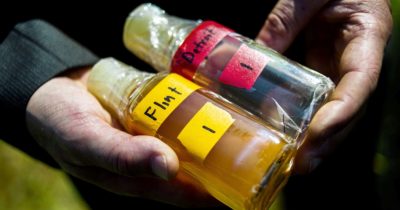
Flint Michigan water, anyone?
One vehicle manufacturer uses water pumps that create significant cavitation that requires specialized protection.
Another manufacturers water pumps also had the same issues but were modified to reduce cavitation when {a widely known specialty coolant} was employed.
Honda kept on using water pump seals that seeped when coolant containing silicates was used.
Cooling systems that contain certain types of nylon are vulnerable to coolants containing carboxylic acid.
Incorrectly diluting coolant can increase pump cavitation, which can lead to water pump damage, cylinder head damage, heater core and radiator damage.
Excess dilution can also lead to erosion, corrosion, and electrolysis.
Water quality variation and concentration issues are addressed now by selling many antifreeze formulas premixed with demineralized or deionized water. No more tap water, well water, or rain/ditch water to corrode the systems.
Certain coolant types shouldn't be mixed because they approach corrosion protection differently, which leads to serious problems within the cooling system.
Let us know when you find a universal coolant that meets the 'need silicate' requirements of one group of vehicle manufacturers while simultaneously meeting the 'silicate free' requirements of another group of manufacturers.
Oh hell this turned into a long post. I need sleep.
Thread Starter
Registered!!
Joined: Jan 2016
Posts: 159
Likes: 0
Rep Power: 0 Re: OEM Coolant vs AFTERMARKET COOLANT
Incorrectly diluting coolant can increase pump cavitation, which can lead to water pump damage, cylinder head damage, heater core and radiator damage.
Excess dilution can also lead to erosion, corrosion, and electrolysis.
Certain coolant types shouldn't be mixed because they approach corrosion protection differently, which leads to serious problems within the cooling system.
Let us know when you find a universal coolant that meets the 'need silicate' requirements of one group of vehicle manufacturers while simultaneously meeting the 'silicate free' requirements of another group of manufacturers.
I'm going with OEM.

Looks like I've been searching up the wrong words in my search.


OF top 99.5% creator (Formerly of the Puffinblunts variety)
Joined: May 2012
Posts: 3,634
Likes: 109
Rep Power: 210 Re: OEM Coolant vs AFTERMARKET COOLANT
Pentosin Pentofrost A3: http://www.pentosin.net/specsheets/P...st_spec_A3.pdf is the same as Honda according to spec sheet. Might even be the manufacturer for Honda?.. and Honda just sticks their label on it and sells it for twice as much?
Last edited by Wankenstein; May 30, 2017 at 01:37 PM.
OF top 99.5% creator (Formerly of the Puffinblunts variety)
Joined: May 2012
Posts: 3,634
Likes: 109
Rep Power: 210 Re: OEM Coolant vs AFTERMARKET COOLANT
Seems Pentosin is a better choice in general compared to Peak, Zerex, Prestone, ect.. Pentosin's specs are usually identical to manufacturer's OEM and they dummy it down with identical dye color as well: Honda = blue dye, Toyota = pink or red dye .. and so on.

Thread Starter
Registered!!
Joined: Jan 2016
Posts: 159
Likes: 0
Rep Power: 0 Re: OEM Coolant vs AFTERMARKET COOLANT
Pentosin Pentofrost A3: http://www.pentosin.net/specsheets/P...st_spec_A3.pdf is the same as Honda according to spec sheet. Might even be the manufacturer for Honda?.. and Honda just sticks their label on it and sells it for twice as much?
I'm going to compare the spec sheets and see how close they are. I like to save $$$$$$$

If you think a good mechanic is expensive, try hiring a bad one
Joined: Dec 2011
Posts: 32,017
Likes: 256
From: Midwest. Aiming about mid-chest
Rep Power: 518 Re: OEM Coolant vs AFTERMARKET COOLANT
I like to save $$$$$$$


