


Sleeved block alternative. Block posting?


Sleeved block alternative. Block posting?
Ok....a sleeved block is great right? But like most great car things it costs alot of cash. A block guard is hardly an alternative. So what about block posting? Has anyone had this idea for our cars? Basicly this technique has been around quite awhile. MANY race cars use this. Block posting consists of:
1. Drilling and threading holes in your block
2. Placing studs into the holes so that they brace the cylinder wall.
3. Sealing
This is a very simple process and could be well within the skill of most DIYers. So, where do you guys think the optimum spots on the block to place the studs would be? I've heard that most cracks occur near the center, so should the bracing be placed in the center? I'm anxious to hear the replys of some of the engine gurus.
1. Drilling and threading holes in your block
2. Placing studs into the holes so that they brace the cylinder wall.
3. Sealing
This is a very simple process and could be well within the skill of most DIYers. So, where do you guys think the optimum spots on the block to place the studs would be? I've heard that most cracks occur near the center, so should the bracing be placed in the center? I'm anxious to hear the replys of some of the engine gurus.

Joined: Sep 2001
Posts: 26,407
Likes: 0
From: Lexington, KY
Rep Power: 585 

to the best of my knowledge doesnt it go like this
block.....coolant space.....cylinder wall.......combustion chamber
now where are u going to drill and do what ur talkin about, or do u have any pictures of this process done
block.....coolant space.....cylinder wall.......combustion chamber
now where are u going to drill and do what ur talkin about, or do u have any pictures of this process done

Registered!!
Joined: May 2003
Posts: 2,464
Likes: 0
From: Luling, Louisiana
Rep Power: 0 So, its just a piece of metal that is inserted into the block that increases the strength to beable to with stand higher pressure inside the engine, right? Is that part of building the bottom end of the engine? Thnx for the info.
Originally posted by C2i0v0i1c
to the best of my knowledge doesnt it go like this
block.....coolant space.....cylinder wall.......combustion chamber
now where are u going to drill and do what ur talkin about, or do u have any pictures of this process done
to the best of my knowledge doesnt it go like this
block.....coolant space.....cylinder wall.......combustion chamber
now where are u going to drill and do what ur talkin about, or do u have any pictures of this process done
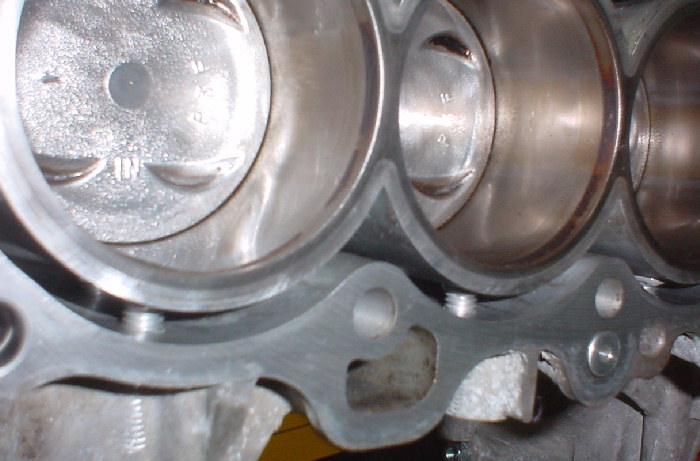
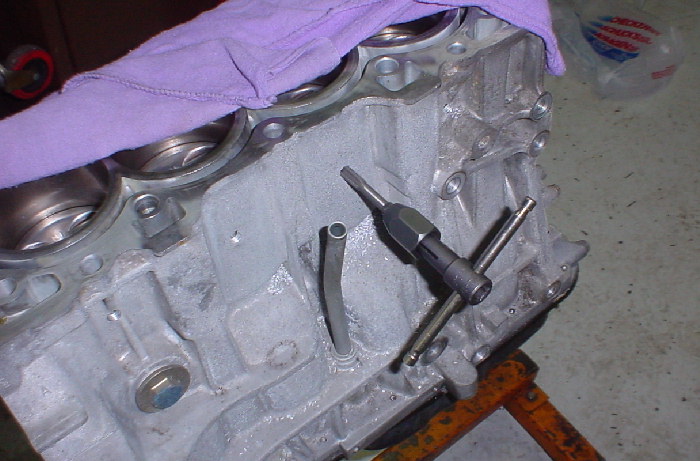
ya...kind of hard to explain. Here are some pics.
Joined: Sep 2001
Posts: 26,407
Likes: 0
From: Lexington, KY
Rep Power: 585 well thats a good picture, i wouldnt trust it, if u ever strip one of those things then ur up a creek. plus coolant could leak out of it. all around sleeving will give u the best future output.
Originally posted by C2i0v0i1c
well thats a good picture, i wouldnt trust it, if u ever strip one of those things then ur up a creek. plus coolant could leak out of it. all around sleeving will give u the best future output.
well thats a good picture, i wouldnt trust it, if u ever strip one of those things then ur up a creek. plus coolant could leak out of it. all around sleeving will give u the best future output.
Alot of people use these block posts, so I would definately trust it. It does basicly the same thing as a sleeve. Except the posts only support the areas that would be most likely to fail. I believe it would also allow for better cooling. It would be difficult for coolant to leak if you properly sealed it with some liquid aluminum or even jb weld. I think for the money it would be worth it. I mean...do you know how many cookies I could buy for the price of a sleeved block?
Last edited by wannabeblown; Oct 31, 2003 at 02:32 PM.
Joined: Sep 2001
Posts: 26,407
Likes: 0
From: Lexington, KY
Rep Power: 585 to me i dont like it, having screws visible in the coolant chamber, the wall can still crack even with the screws there. by putting pressure on the points where the screws are ur leaving out the part where the pressure will move to the parts where there aint any screws, i could forsee serious warping of the walls, maybe, i dont know bc ive never heard or seen of this til now, i still think that a stock sleeve will crack with 20+ psi, aftermarket sleeves are tested to 45-55 psi, and thats a heck of alot

Registered!!
iTrader: (2)
Joined: Mar 2003
Posts: 3,071
Likes: 0
From: Lancaster, California, US
Rep Power: 314 That is a step under a block guard. That only holds it in place wherever you put the studs. When the block guard holds the entire top of the cylinders.
You guys also have to remember, the sleeves shouldnt be ranked by the amount of boost you can put to them, but by the cylinder pressure they can handle. Because i am making more cylinder pressure right now at 8 psi than most guys would be making at 15 psi.
You guys also have to remember, the sleeves shouldnt be ranked by the amount of boost you can put to them, but by the cylinder pressure they can handle. Because i am making more cylinder pressure right now at 8 psi than most guys would be making at 15 psi.

My friend and I are going to try our hand at this on a ZC block, should be fun stuff this weekend. One of the tech gurus at a local shop said the thrust axis is on the intake side. Therefore we are going to place 2 studs on the intake side and torque them a bit less to leave room for expansion. He also said no more then 4 ft/lbs of torque on the intake side, and no more than 6 on the exhaust side.
Last edited by wannabeblown; Nov 3, 2003 at 12:21 AM.
Joined: Sep 2001
Posts: 26,407
Likes: 0
From: Lexington, KY
Rep Power: 585 Originally posted by Catalyst
That is a step under a block guard. That only holds it in place wherever you put the studs. When the block guard holds the entire top of the cylinders.
You guys also have to remember, the sleeves shouldnt be ranked by the amount of boost you can put to them, but by the cylinder pressure they can handle. Because i am making more cylinder pressure right now at 8 psi than most guys would be making at 15 psi.
That is a step under a block guard. That only holds it in place wherever you put the studs. When the block guard holds the entire top of the cylinders.
You guys also have to remember, the sleeves shouldnt be ranked by the amount of boost you can put to them, but by the cylinder pressure they can handle. Because i am making more cylinder pressure right now at 8 psi than most guys would be making at 15 psi.

Registered!!
Joined: Jun 2001
Posts: 330
Likes: 0
From: Marietta, Ohio, US
Rep Power: 0 This just looks like a bad idea... Drilling and tapping holes in your engine block walls is just a bad idea.
Do yourself a favor, get sleeves and have them bored and honed, or get a blockguard. You'll be much better off. A blockguard is reasonable in price, easy to install (or at least as easy if not easier than putting holes in your engine block), and safer.
Do yourself a favor, get sleeves and have them bored and honed, or get a blockguard. You'll be much better off. A blockguard is reasonable in price, easy to install (or at least as easy if not easier than putting holes in your engine block), and safer.
Drilling through the sides of the block and saying that it is trustworthy and does the same thing as a sleeve....  Please think about your options and do some homework on sleeves before you do anything like that.
Please think about your options and do some homework on sleeves before you do anything like that. 


