


NJ B/S thread


dood i got it from ...so u must have AIDS also then...


...so u must have AIDS also then...
Originally Posted by tuner04civic
spell check owns you.
Last edited by exturbo6; Aug 29, 2006 at 08:31 AM. Reason: Automerged Doublepost


^^ i dont get it.
lol...that last post was for eddie...
litebright was funt hou when i was lil...lol
lol...that last post was for eddie...
litebright was funt hou when i was lil...lol
Last edited by exturbo6; Aug 29, 2006 at 09:00 AM. Reason: Automerged Doublepost
sotp collaborate & listen ice is back with a bran new invention someting grabs a hold of me tightly flow like a harpoon daily & nightly will it ever sto yo i dont' know tun off the lights & i'll glow to the extreme i rock the mic like a vandal light up the stage & wax a chump like a candle ..... you have no idea what that is?
Originally Posted by eddieisaricer
sotp collaborate & listen ice is back with a bran new invention someting grabs a hold of me tightly flow like a harpoon daily & nightly will it ever sto yo i dont' know tun off the lights & i'll glow to the extreme i rock the mic like a vandal light up the stage & wax a chump like a candle ..... you have no idea what that is?


Ferrets: You cannot live without them!
Why not? Ferrets are intelligent, curious, playful, persistent, inventive, fun to be around and they take good care of you!
Another reason I like them is that they are all individuals with different personalities. They also like to steal loose objects and disorganise parts of your home, especially house plants. In return they put great demands on you! Not everyone likes to always think about not letting dangerous objects be left around, always be prepared to not find their socks, always be attentive to how they feel, because if they get ill it's often something which has to be taken care of in a hurry. ...but they aren't for everyone
This means that ferrets are not for everyone! Before you add a ferret to your family, find out as much as possible about them. If possible, do visit a family with ferrets, as it's otherwise hard to get a correct impression of them.
 Do I want to warn people off from getting a ferret? Actually, yes. We have far too many we have to try to find new homes for, so clearly it's far too easy to get one on the wrong grounds. I think the worst examples are where children have gotten ferrets for themselves, neither them nor their parents understanding it's a matter for the whole family, always. An other common situation seems to be students who have gotten themselves a ferret without planning for how they'll be able to take care of them several years into the future, and then their circumstances change.
It's also important to realize ferrets are animals which will require lots of time (both to play with and take them out for walks when they are awake and feel like it, and as a long term committment), require that you always have money enough to take care of them.
 På svenska, några ämnen som inte finns på engelska/in Swedish, may have more photos
Temporary galleries:
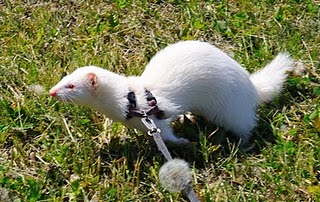
Photo gallery 1

Photo gallery 2


Rasmus. Photos from my photo album

General information about ferrets
The ferret, Mustela furo, is since a very long time a domestic animal, but they can look similar to, and are related to, some of the half dozen polecat species in the world.
The jobs ferrets have had in human service have been pest control, rabbit hunting, pets and laying cables in tubes for example when building aircraft and ships or TV cables under a cathedral floor. There are also indications that they would be very proficient at finding socks.
Ferrets can become up to about 10 years old and place great demands on you in some respects, so you don't get one without being well prepared!
In case you do decide to add one to your family, be aware that you can only do it if you're able to do it if you can make long range plans, that you must be the right kind of persons to enjoy living with ferrets and vice versa and furthermore that it is always a matter which concerns the whole family.
Should you decide to get one, don't be surprised if you get more later on, both for your and your ferret's sake. Living with and taking care of ferrets
In your home you keep them about like you keep cats and dogs. Ferrets are carnivores just like dogs and cats, but just as they are different from each other, ferrets are different from both and have some properties and demands of their own.
Ferrets shouldn't live in cages as you can have them in most ordinary homes, but it's important you arrange it so they can have fun and not hurt themselves!
I keep, at somewhat irregular intervals, a sometimes illustrated ferret diary, where I write about what I and my ferrets do.
They are to a large extent creatures of habit, but they still feel like doing different things different days, and you have to spend lots of time playing with them.
The times of year when the weather is good, neither too cold nor too hot and light, you can very well take your ferrets out for long walks. In the autumn a walk of 4 km before the ferret wants to be carried even across street isn't unusual for me.
It's hard to predict what a ferret will like, since their individual differences between ferrets are more significant than age, sex or anything else.
Having more than one ferret isn't twice as much work. It can be less. But I'm still not sure what the "optimum number" is. Ferrets needs friends, humans or other ferrets, which in itself is a good reason to have more than one ferret. But we shouldn't fool ourselves into thinking that all ferrets will like each other.
Another very good reason to have more than ferret is that ferrets don't live forever, and getting one as replacement for the "perfect" one you had before is very tough. They are all different, and a kit cannot live up to the reputation of the older ferret you had. If you have more than one, you can get to know them as the individuals they are and value them for that!
I have found out that expensive though they may be to purchase and keep (always have reserve money and/or insurance for unexpected veterinary costs), seen as a whole, it can actually be a negative cost as you don't have the time to spend money on lots of other things. If you can, you really should have them insured!
It's important that ferrets get healthy food to eat, and that they always have food and water available, as starving isn't good for them.
Many people ask if you cat get ferrets litter trained. For us, that's never been a problem.
Contrary to what you might think, it's at most times not at all necessary to bathe ferret. They actually smell less and get more beautiful fur without it.
The fur they take good care of themselves, but you have to help them with some other things. If they don't run a lot outdoors, you have to cut their nails, don't cut too close to the pulp or it will hurt and then they don't want to cut their nails another time and place the cut parallell to "the ground" so the nails will wear better. When cleaning their ears, just do the outer ears and don't put something into the ear tube, as then you risk pushing down stuff which may lead to problems.
Since you can become allergic, to ferrets it's a very good idea meeting some before you decide to get one.
In case you wonder how large my ferrets are, I've got a diagram and a table which shows masses and how they change.
These are my basic rules I try to follow.
The ferrets who live with me
We have a saying in my family: I take care of my ferrets and my ferrets takes care of me. These are the ones taking care of me: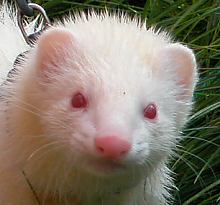 Kimber
Not as reserved as the others. Likes to go out.
Born 2005.
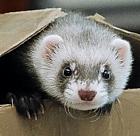 Dorrit
Happy and playful. Pretty good climber.
Born 2004.
 Rasmus
Gets along pretty well with the others. But don't like new ferrets.
Born 2000.
Photos of ferrets no longer with us: Alison, Natasja, Rustan, Carmen, Roxane, Carina, Roskva, Grimer, Parwan, Rita.
You can also read what I've written about ferrets on usenet.
Last modified 2006 Aug 01 by Urban If you want to contact me, you can use this form

This site best viewed at a monitor resolution of 1024x768 or better.
Last updated:
8/24/06
Ferrets Anonymous

Surrender Ferret
When the shelter isn't the best solution... In today's hustle and bustle of life, when lives change for whatever reason, sometimes as pet owners we contemplate a change... for us, and for our pet ferrets. There is one change which should be weighed very heavily in the hearts of ferret owners, however, that of turning an older ferret over to a shelter... any shelter, ferret or otherwise. While shelters are good, we must realize several things. For an emergency, a crisis... when there is no other solution -in a life and death situation- a shelter is acceptable. If there is a matter of convenience, or a desire for a change, there is undeniably no reason for a shelter life for your pet ferret.
Yes, in the worldly ferret community we think 'the shelter can provide better for my ferret now,' 'I don't have the time,' etc. Or perhaps the shelter knows what to watch for in an older ferret, etc. However, there is an undeniable action: abandonment. And your ferret will sense this, whatever the reason, whether you think it is for the better or naught.
For example: Dan (not a real name), called the shelter, "Hi, I need you to take my ferret; my work schedule has changed after several years and now I don't get to let my ferret out as often as I used to." Hey, this is a great, caring owner right? Perhaps, then the rest of the story was revealed. "My ferret is 5 1/2 years old and he should have someone who can give him more attention." Aha! This still sounds great UNTIL--we analyze the situation. An older ferret--who has been an ONLY ferret. The ferret lives in a great home, gets good food, and is comfortable but the owner can only give him an hour a day out of the cage now. Not so bad really.
So the alternative is, the ferret would come to a shelter. Most likely this ferret would lose the cage he is familiar with, live in a dormitory style setting, with lots of other ferret smells, all different sounds, different routines. Sure, he would get out an hour or so a day at the shelter, but would have to deal with other ferrets. Not so bad you think? Well what about the single ferret who doesn't even know he is a ferret--after all it has been him and his owner, two buddies, now he has to deal with these fur faced creatures who sniff both ends, push him around, etc. Stressful? YOU BET! It sure isn't home, not even close! All the security the poor ferret had is gone. This ferret will never know the owner abandoned him all in the name of a better life. Abandoned, you bet, and that is how the ferret will feel: for no reason dumped on the door of a strange place. He may be cuddled and talked to, but it won't be home. He may have food to eat, it won't be home.
So, what will become of this lost little ferret? Most likely the ferret will get depressed, develop loose stools, lack of appetite, lose weight and loss of the will to live. In human terms it is called RTS, Relocation Trauma Syndrome and this is seen often with (human) geriatric patients placed in nursing homes. In ferret shelters caretakers aggressively battle this with subcutaneous fluids, forced feedings, and medications. Sometimes it works, sometimes it does not. When it works, and I see it often, you are left with a ferret that eats, sleeps, battles underlying health problems which surface due to stress, and has virtually no life or luster. Yes, a ferret devoid of character, rejected, and forlorn.
Is this what you as a ferret owner would want to happen? Heck no. You can understand why in an extreme case a ferret would need to endure this existence, say if the family perished in an accident and there was no familiar place for the ferret to go. But because your work schedule changed? Heck NO!
When these points were addressed by the caller, Dan, he said, "You know, I never thought of that. I thought that he would get more attention. I never considered that what attention he got would be shared with umpteen other shelter ferrets. I bet that since his life expectancy is only a few more years, it would be better for him to stay at home."
Sure, I agreed, and told Dan whenever he had a question on behavior or health to call the shelter, that we would be happy to share our knowledge and guide him along. In the end, we know an older ferret was spared the shock, the fear of abandonment which he would have endured otherwise, due to his owner's good intentions. -A.K. Drakiotes
Why not? Ferrets are intelligent, curious, playful, persistent, inventive, fun to be around and they take good care of you!
Another reason I like them is that they are all individuals with different personalities. They also like to steal loose objects and disorganise parts of your home, especially house plants. In return they put great demands on you! Not everyone likes to always think about not letting dangerous objects be left around, always be prepared to not find their socks, always be attentive to how they feel, because if they get ill it's often something which has to be taken care of in a hurry. ...but they aren't for everyone
This means that ferrets are not for everyone! Before you add a ferret to your family, find out as much as possible about them. If possible, do visit a family with ferrets, as it's otherwise hard to get a correct impression of them.
 Do I want to warn people off from getting a ferret? Actually, yes. We have far too many we have to try to find new homes for, so clearly it's far too easy to get one on the wrong grounds. I think the worst examples are where children have gotten ferrets for themselves, neither them nor their parents understanding it's a matter for the whole family, always. An other common situation seems to be students who have gotten themselves a ferret without planning for how they'll be able to take care of them several years into the future, and then their circumstances change.
 It's also important to realize ferrets are animals which will require lots of time (both to play with and take them out for walks when they are awake and feel like it, and as a long term committment), require that you always have money enough to take care of them.
 På svenska, några ämnen som inte finns på engelska/in Swedish, may have more photos
- General information about ferrets
- Living with and taking care of ferrets
- The ferrets who live with me
- Ferret photos
- My ferret weblog
- Ferrets in Sweden - what's different from USA?
- Information in other places
- Ferrets in fantastic fiction
- Angora ferrets
- How do I pronounce my ferrets' names?
Temporary galleries:
Photo gallery 1
Photo gallery 2


Rasmus. Photos from my photo album
General information about ferrets
The ferret, Mustela furo, is since a very long time a domestic animal, but they can look similar to, and are related to, some of the half dozen polecat species in the world.
The jobs ferrets have had in human service have been pest control, rabbit hunting, pets and laying cables in tubes for example when building aircraft and ships or TV cables under a cathedral floor. There are also indications that they would be very proficient at finding socks.
Ferrets can become up to about 10 years old and place great demands on you in some respects, so you don't get one without being well prepared!
In case you do decide to add one to your family, be aware that you can only do it if you're able to do it if you can make long range plans, that you must be the right kind of persons to enjoy living with ferrets and vice versa and furthermore that it is always a matter which concerns the whole family.
Should you decide to get one, don't be surprised if you get more later on, both for your and your ferret's sake.
 Living with and taking care of ferrets
In your home you keep them about like you keep cats and dogs. Ferrets are carnivores just like dogs and cats, but just as they are different from each other, ferrets are different from both and have some properties and demands of their own.
Ferrets shouldn't live in cages as you can have them in most ordinary homes, but it's important you arrange it so they can have fun and not hurt themselves!
I keep, at somewhat irregular intervals, a sometimes illustrated ferret diary, where I write about what I and my ferrets do.
They are to a large extent creatures of habit, but they still feel like doing different things different days, and you have to spend lots of time playing with them.
The times of year when the weather is good, neither too cold nor too hot and light, you can very well take your ferrets out for long walks. In the autumn a walk of 4 km before the ferret wants to be carried even across street isn't unusual for me.
It's hard to predict what a ferret will like, since their individual differences between ferrets are more significant than age, sex or anything else.
Having more than one ferret isn't twice as much work. It can be less. But I'm still not sure what the "optimum number" is. Ferrets needs friends, humans or other ferrets, which in itself is a good reason to have more than one ferret. But we shouldn't fool ourselves into thinking that all ferrets will like each other.
Another very good reason to have more than ferret is that ferrets don't live forever, and getting one as replacement for the "perfect" one you had before is very tough. They are all different, and a kit cannot live up to the reputation of the older ferret you had. If you have more than one, you can get to know them as the individuals they are and value them for that!
I have found out that expensive though they may be to purchase and keep (always have reserve money and/or insurance for unexpected veterinary costs), seen as a whole, it can actually be a negative cost as you don't have the time to spend money on lots of other things. If you can, you really should have them insured!
It's important that ferrets get healthy food to eat, and that they always have food and water available, as starving isn't good for them.
Many people ask if you cat get ferrets litter trained. For us, that's never been a problem.
Contrary to what you might think, it's at most times not at all necessary to bathe ferret. They actually smell less and get more beautiful fur without it.
The fur they take good care of themselves, but you have to help them with some other things. If they don't run a lot outdoors, you have to cut their nails, don't cut too close to the pulp or it will hurt and then they don't want to cut their nails another time and place the cut parallell to "the ground" so the nails will wear better. When cleaning their ears, just do the outer ears and don't put something into the ear tube, as then you risk pushing down stuff which may lead to problems.
Since you can become allergic, to ferrets it's a very good idea meeting some before you decide to get one.
In case you wonder how large my ferrets are, I've got
a diagram and a table which shows masses and how they change. These are my basic rules I try to follow.
The ferrets who live with me
We have a saying in my family: I take care of my ferrets and my ferrets takes care of me. These are the ones taking care of me:
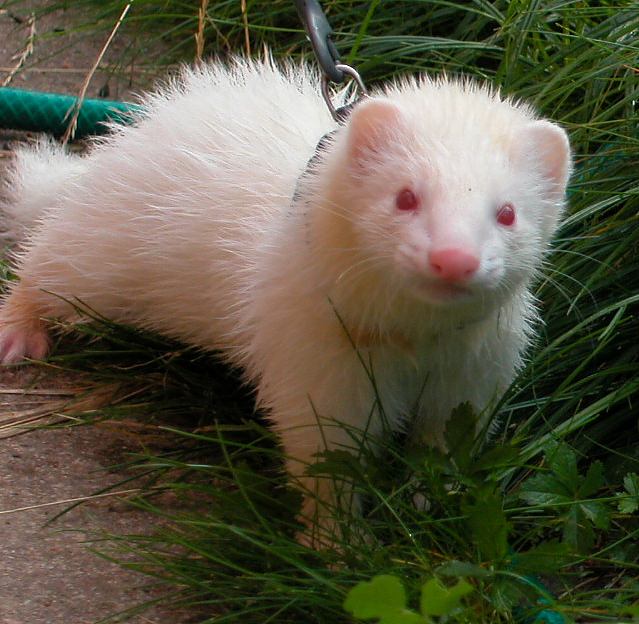 Kimber
Not as reserved as the others. Likes to go out.
Born 2005.
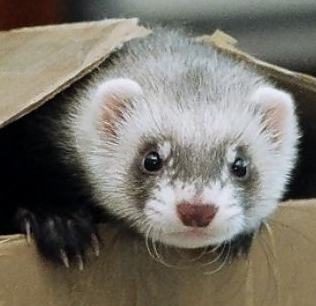 Dorrit
Happy and playful. Pretty good climber.
Born 2004.
 Rasmus
Gets along pretty well with the others. But don't like new ferrets.
Born 2000.
Photos of ferrets no longer with us: Alison, Natasja, Rustan, Carmen, Roxane, Carina, Roskva, Grimer, Parwan, Rita.
You can also read what I've written about ferrets on usenet.
Last modified 2006 Aug 01 by Urban If you want to contact me, you can use this form
This site best viewed at a monitor resolution of 1024x768 or better.
Last updated:
8/24/06
Ferrets Anonymous
- Home
- Legalization News
- Legalization Archives<LI type=disc>Ferrets in the News
- Ferret News Archives Take Care of Your Ferrets
- Vet List
- Medical Articles
- Avoid the Checkpoints
- Know Your Rights
- Lost and Found Community
- Member Submissions
- Meetings
- Ferret Events
- Links to Other Ferret Websites Support Ferrets Anonymous
- Merchandise
- Free Newsletter Contact Us
- E-mail & Contact Info
Subject: AB 647 Dies Due to Procedural Rift
Importance: High
Hello all,
Sadly our bill died in the legislature yesterday due to a procedural
attempt by our author to keep it alive without prior approval by the
Senate leadership. It had nothing to do with the bill (the Senate
leadership is NOT against this issue) but everything to do with not
following procedures that would have put our bill in a more favorable
light.
Our lobbyist is still trying to see if there is anything that can be
done at any level to salvage this year's efforts but keep in mind
that failure at the legislative level NEVER precludes another bill,
NEVER shuts the door on subsequent bills or authors. What WILL close
the door for years to come on ALL avenues (including efforts at the
level of the Governor's office) is a FAILED INITIATIVE.
If a ferret legalization ballot initiative qualifies, make no
mistake, it WILL FAIL. And it will fail for several reasons:
1) The issue DOES NOT AFFECT THE MAJORITY OF CA VOTERS.
2) We have NO advertising budget which is KEY to success as anyone
knows with initiatives.
3) Without any kind of environmental study, we will have multiple
groups in opposition who dropped their opposition to our bill when a
study was included (Sierra Club, CA Waterfowl, Audubon Society,
Governor's Office, Planning and Conservation League). All of these
organizations have $$ to spend in political ads against a ferret
initiative.
No legislator will introduce a ferret legalization bill on the heels
of a failed initiative. No Governor will legalize ferrets after the
people of California have spoken and said they do not want ferrets
legalized in California. Our opponents would be delighted to see a
ferret legalization initiative on the ballot because they know it
will fail and it will be the end of the issue for quite some time.
The initiative plays right into their hands.
A very small percentage of the bills introduced each year reach the
Governor's Office. If our author had made our bill more of a priority
and received prior approval for his procedural efforts with the
Senate leadership, we would have again reached the Governor's desk
and this was a bill he could sign. My objective in this issue has
been to move the ball forward AND TO DO NO HARM to the issue. A
FAILED INITIATIVE DOES SERIOUS HARM TO FERRET LEGALIZATION EFFORTS.
I'm sorry about the bill's demise and want to thank all of you who
wrote to your Senators and Assemblymembers. You've done a fine job.
We owe a huge debt of gratitude to our lobbyist Bob Naylor and to our
author Paul Koretz. It's quite a bit of work to carry a bill and Mr.
Koretz did a fantastic job of presenting our bill in committee and
clearly cared about it but with so many bills to carry, it just came
up short sadly.
Another ferret bill will eventually succeed. In any case, we close no
doors with this failure. But make no mistake, a failed initiative
CLOSES ALL DOORS TO LEGALIZATION FOR DECADES.
Jeanne Carley
Importance: High
Hello all,
Sadly our bill died in the legislature yesterday due to a procedural
attempt by our author to keep it alive without prior approval by the
Senate leadership. It had nothing to do with the bill (the Senate
leadership is NOT against this issue) but everything to do with not
following procedures that would have put our bill in a more favorable
light.
Our lobbyist is still trying to see if there is anything that can be
done at any level to salvage this year's efforts but keep in mind
that failure at the legislative level NEVER precludes another bill,
NEVER shuts the door on subsequent bills or authors. What WILL close
the door for years to come on ALL avenues (including efforts at the
level of the Governor's office) is a FAILED INITIATIVE.
If a ferret legalization ballot initiative qualifies, make no
mistake, it WILL FAIL. And it will fail for several reasons:
1) The issue DOES NOT AFFECT THE MAJORITY OF CA VOTERS.
2) We have NO advertising budget which is KEY to success as anyone
knows with initiatives.
3) Without any kind of environmental study, we will have multiple
groups in opposition who dropped their opposition to our bill when a
study was included (Sierra Club, CA Waterfowl, Audubon Society,
Governor's Office, Planning and Conservation League). All of these
organizations have $$ to spend in political ads against a ferret
initiative.
No legislator will introduce a ferret legalization bill on the heels
of a failed initiative. No Governor will legalize ferrets after the
people of California have spoken and said they do not want ferrets
legalized in California. Our opponents would be delighted to see a
ferret legalization initiative on the ballot because they know it
will fail and it will be the end of the issue for quite some time.
The initiative plays right into their hands.
A very small percentage of the bills introduced each year reach the
Governor's Office. If our author had made our bill more of a priority
and received prior approval for his procedural efforts with the
Senate leadership, we would have again reached the Governor's desk
and this was a bill he could sign. My objective in this issue has
been to move the ball forward AND TO DO NO HARM to the issue. A
FAILED INITIATIVE DOES SERIOUS HARM TO FERRET LEGALIZATION EFFORTS.
I'm sorry about the bill's demise and want to thank all of you who
wrote to your Senators and Assemblymembers. You've done a fine job.
We owe a huge debt of gratitude to our lobbyist Bob Naylor and to our
author Paul Koretz. It's quite a bit of work to carry a bill and Mr.
Koretz did a fantastic job of presenting our bill in committee and
clearly cared about it but with so many bills to carry, it just came
up short sadly.
Another ferret bill will eventually succeed. In any case, we close no
doors with this failure. But make no mistake, a failed initiative
CLOSES ALL DOORS TO LEGALIZATION FOR DECADES.
Jeanne Carley
Surrender Ferret
When the shelter isn't the best solution... In today's hustle and bustle of life, when lives change for whatever reason, sometimes as pet owners we contemplate a change... for us, and for our pet ferrets. There is one change which should be weighed very heavily in the hearts of ferret owners, however, that of turning an older ferret over to a shelter... any shelter, ferret or otherwise. While shelters are good, we must realize several things. For an emergency, a crisis... when there is no other solution -in a life and death situation- a shelter is acceptable. If there is a matter of convenience, or a desire for a change, there is undeniably no reason for a shelter life for your pet ferret.
Yes, in the worldly ferret community we think 'the shelter can provide better for my ferret now,' 'I don't have the time,' etc. Or perhaps the shelter knows what to watch for in an older ferret, etc. However, there is an undeniable action: abandonment. And your ferret will sense this, whatever the reason, whether you think it is for the better or naught.
For example: Dan (not a real name), called the shelter, "Hi, I need you to take my ferret; my work schedule has changed after several years and now I don't get to let my ferret out as often as I used to." Hey, this is a great, caring owner right? Perhaps, then the rest of the story was revealed. "My ferret is 5 1/2 years old and he should have someone who can give him more attention." Aha! This still sounds great UNTIL--we analyze the situation. An older ferret--who has been an ONLY ferret. The ferret lives in a great home, gets good food, and is comfortable but the owner can only give him an hour a day out of the cage now. Not so bad really.
So the alternative is, the ferret would come to a shelter. Most likely this ferret would lose the cage he is familiar with, live in a dormitory style setting, with lots of other ferret smells, all different sounds, different routines. Sure, he would get out an hour or so a day at the shelter, but would have to deal with other ferrets. Not so bad you think? Well what about the single ferret who doesn't even know he is a ferret--after all it has been him and his owner, two buddies, now he has to deal with these fur faced creatures who sniff both ends, push him around, etc. Stressful? YOU BET! It sure isn't home, not even close! All the security the poor ferret had is gone. This ferret will never know the owner abandoned him all in the name of a better life. Abandoned, you bet, and that is how the ferret will feel: for no reason dumped on the door of a strange place. He may be cuddled and talked to, but it won't be home. He may have food to eat, it won't be home.
So, what will become of this lost little ferret? Most likely the ferret will get depressed, develop loose stools, lack of appetite, lose weight and loss of the will to live. In human terms it is called RTS, Relocation Trauma Syndrome and this is seen often with (human) geriatric patients placed in nursing homes. In ferret shelters caretakers aggressively battle this with subcutaneous fluids, forced feedings, and medications. Sometimes it works, sometimes it does not. When it works, and I see it often, you are left with a ferret that eats, sleeps, battles underlying health problems which surface due to stress, and has virtually no life or luster. Yes, a ferret devoid of character, rejected, and forlorn.
Is this what you as a ferret owner would want to happen? Heck no. You can understand why in an extreme case a ferret would need to endure this existence, say if the family perished in an accident and there was no familiar place for the ferret to go. But because your work schedule changed? Heck NO!
When these points were addressed by the caller, Dan, he said, "You know, I never thought of that. I thought that he would get more attention. I never considered that what attention he got would be shared with umpteen other shelter ferrets. I bet that since his life expectancy is only a few more years, it would be better for him to stay at home."
Sure, I agreed, and told Dan whenever he had a question on behavior or health to call the shelter, that we would be happy to share our knowledge and guide him along. In the end, we know an older ferret was spared the shock, the fear of abandonment which he would have endured otherwise, due to his owner's good intentions. -A.K. Drakiotes
Last edited by exturbo6; Aug 29, 2006 at 09:39 AM. Reason: Automerged Doublepost

